Maintaining your legacy app now costs more than replacing it.
Your team rewrites it in weeks with Maleus agents, on the stack they already know. You keep the code, and you decide what's worth keeping.
Every year it costs a little more and fits a little less.
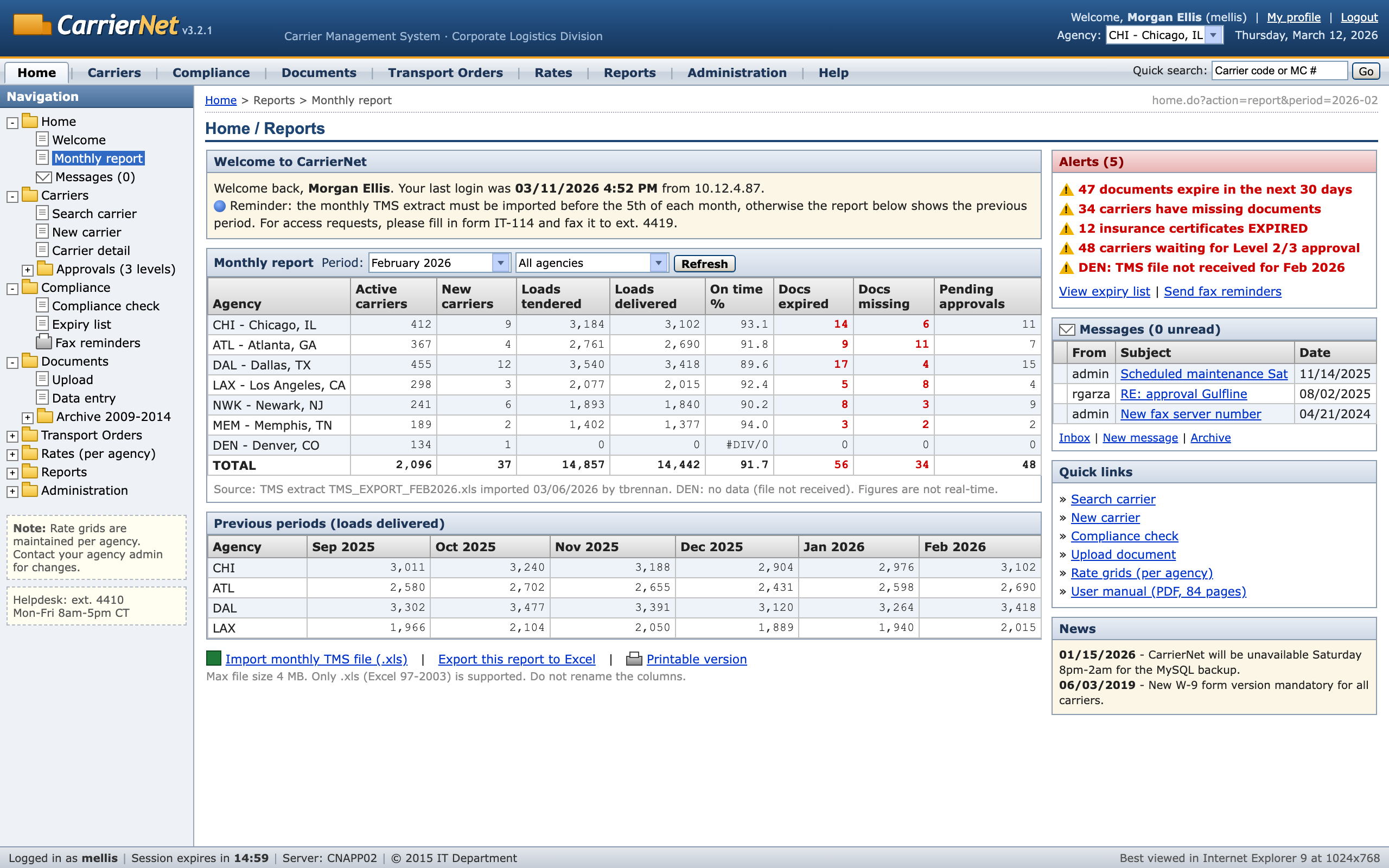
Every logistics company has one. The app that still runs a core process, built a decade ago, that nobody wants to touch.
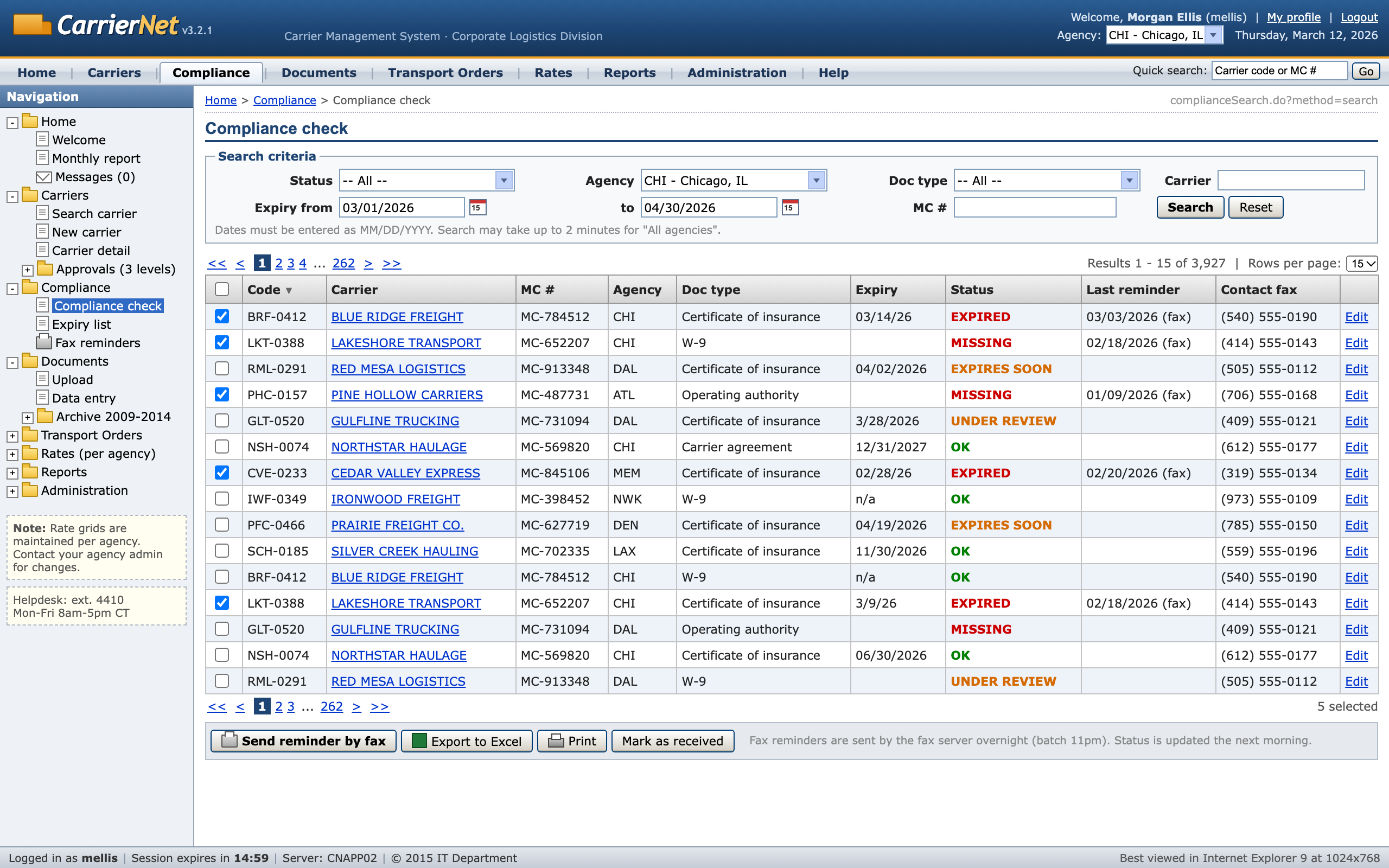
It costs more every year
Old frameworks, unpatched dependencies, and the one person who still knows how it works.
Nobody dares to touch it
No tests, no docs, business rules buried in stored procedures.
It no longer fits your work
Half the screens serve a process you dropped years ago.
For years, rewriting it was riskier than keeping it.
What changed in 2026.
Coding agents can now read an old codebase, turn it into specs, and rebuild it on a modern stack. The slow, expensive part of a rewrite is done by machines. Your team stays in charge of the decisions: what to keep, what to drop, what to sign off.
Now the risky option is keeping it, not rewriting it.
- Keeping it alive
- Rewrite with Maleus
- Monthly provision
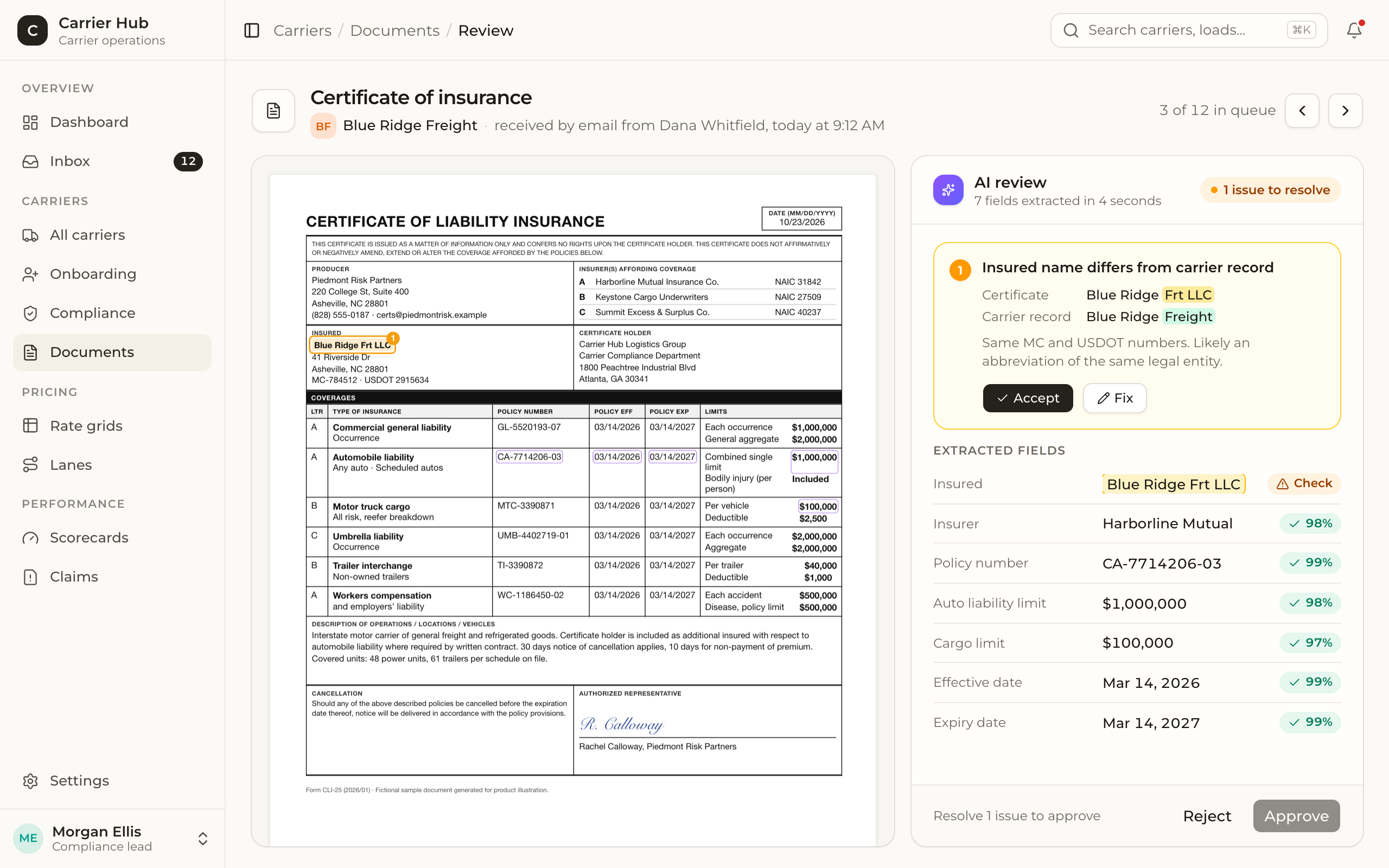
An 11-year-old carrier app, replaced in 6 weeks.
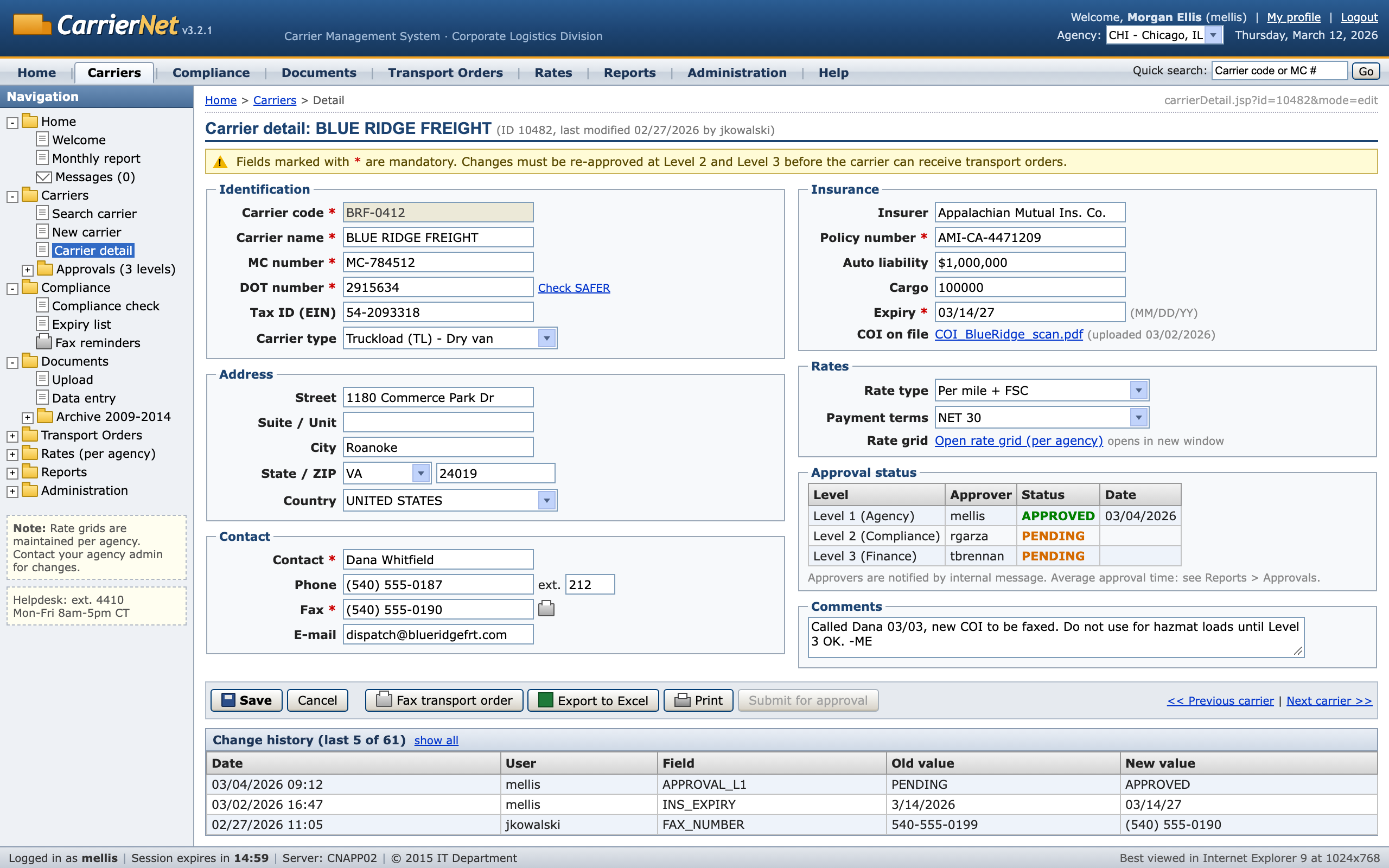
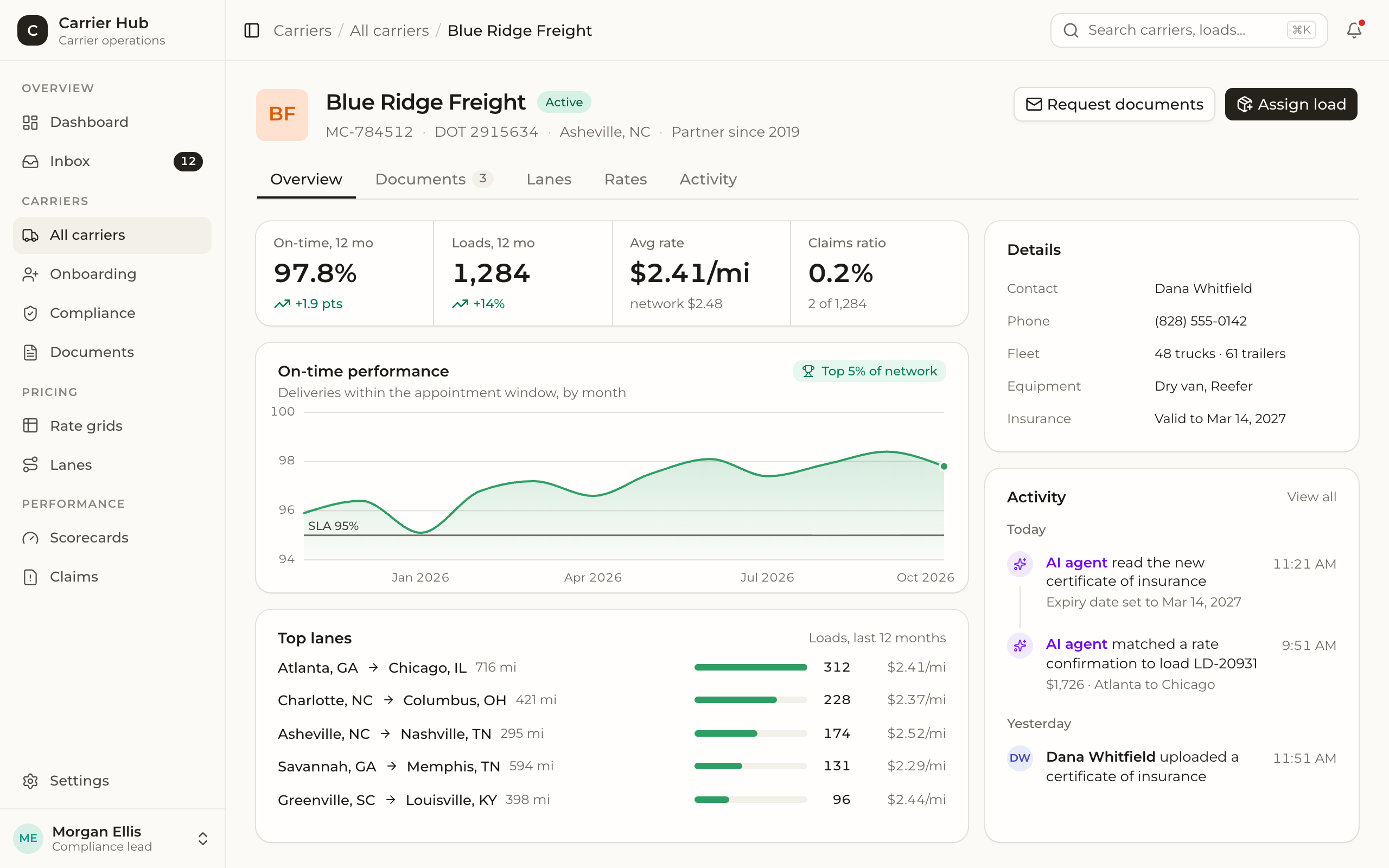
A global logistics group ran its carrier management app (onboarding, compliance documents and rate grids for 2,600 subcontracted carriers) on a Spring 3 stack. One full-time developer kept it alive.
- Weeks 1 and 2
From code to specs
Maleus read the 180,000-line codebase and turned it into specs and a working prototype.
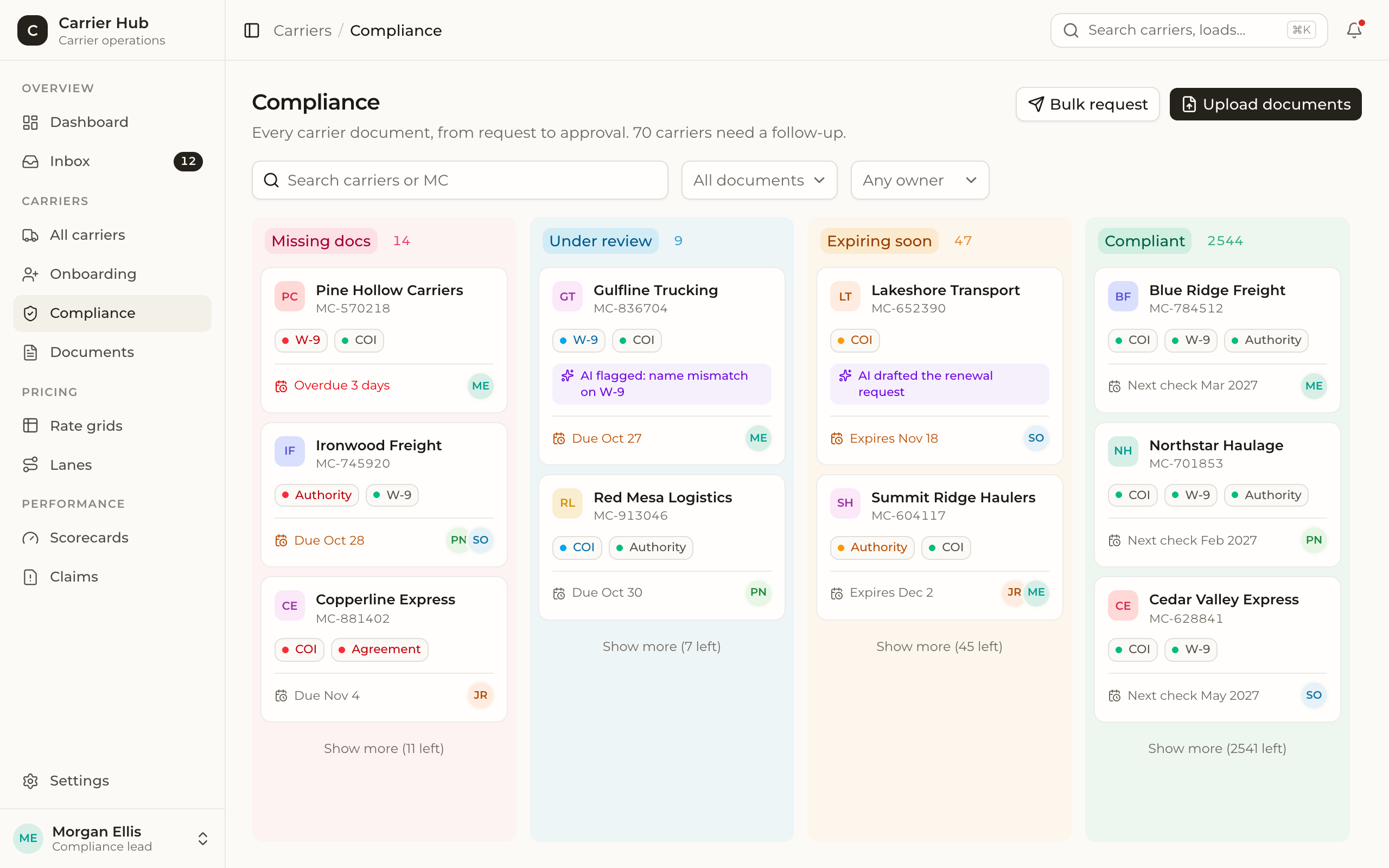
The carrier procurement manager went through them and cut 23 of 71 screens:
- Faxing transport orders
- A monthly Excel import from the TMS
- An inbox nobody opened
- Weeks 3 to 5
Rebuild
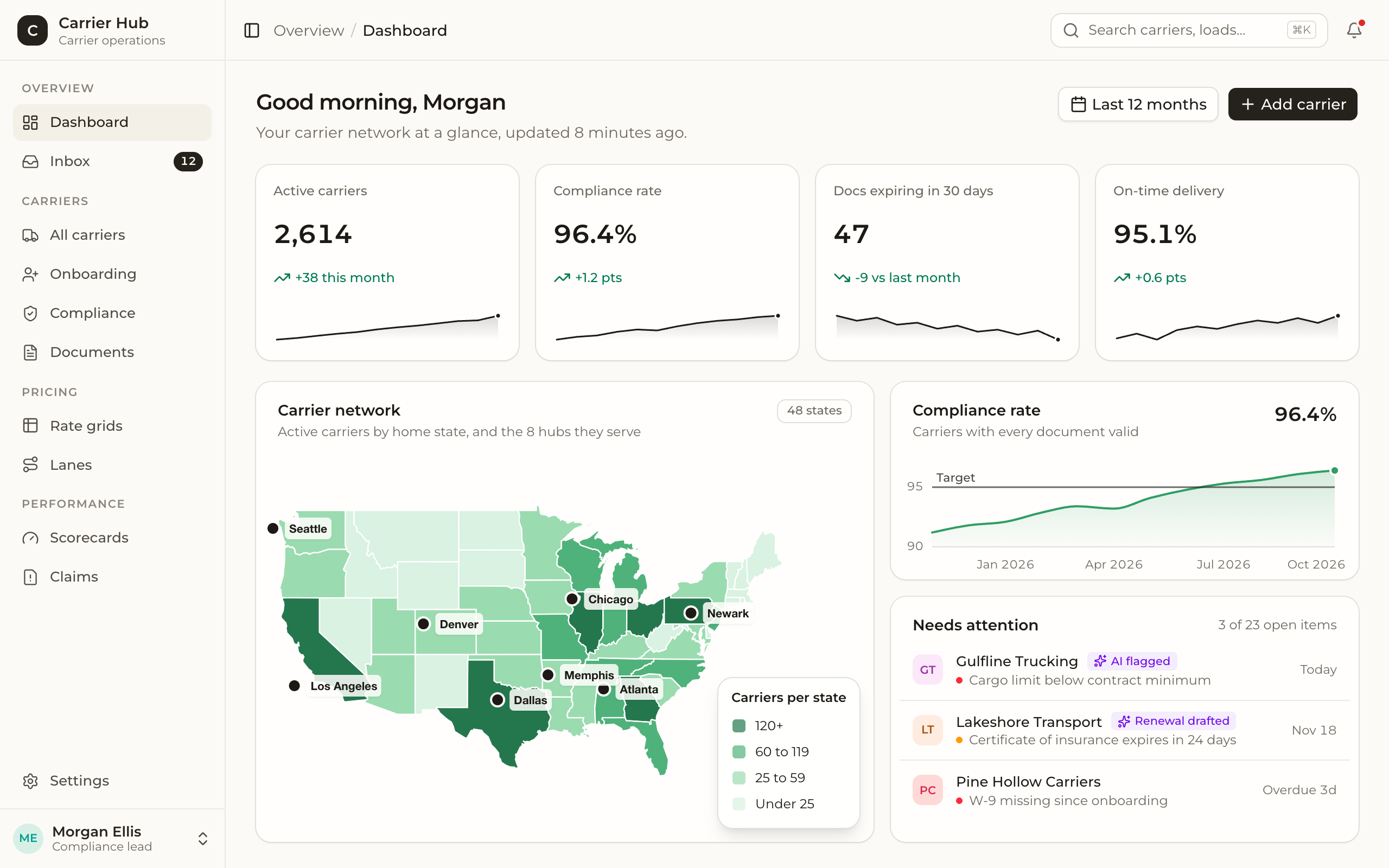
Maleus agents rebuilt the app on Node.js, Angular and PostgreSQL, the stack the group's own developers already master, while the business owner tested it.
It gained what the old stack never had:
- SSO
- A mobile portal for carriers
- An AI agent that checks every uploaded document, saving about 675 hours of manual checks a year
- Week 6
Migrate the data
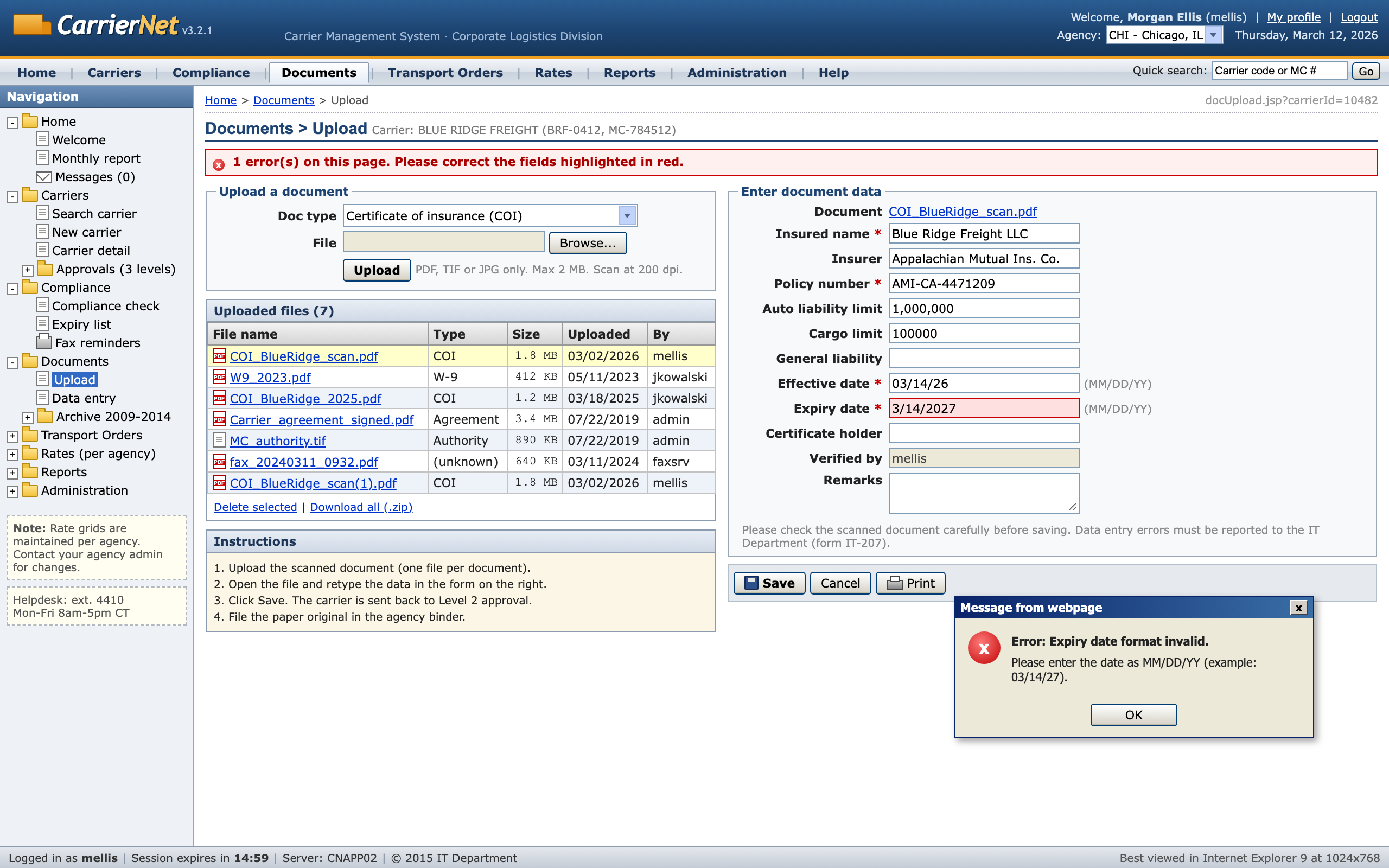
412,000 rows of data from 41 tables. One script moved 96% in a single pass.
Eleven targeted scripts handled the rest:
- Duplicate carriers after acquisitions
- Free-text expiry dates
- Three generations of rate grids
Now picture it on your app.
Same process, on the stack you have, toward the stack your team already knows.
 Specs from your codeAny legacy in, any modern stack out
 Spring Boot 3latest Java LTS
 ASP.NET Corelatest .NET LTS
 Node.jsTypeScript
 React
 Angular
 PostgreSQL
 SQL Server
 MySQL
 Java· What we take over
- Java 6 to 11
- Spring 2 to 5
- Spring MVC
- Struts 1 and 2
- JSF
- JSP and Servlets
- J2EE / Java EE (EJB)
- Hibernate 3 to 5
- GWT
- Wicket
Like those 23 screens, the modules nobody uses don't get rewritten. You add what the old stack never allowed: SSO, AI agents that take over the manual checks, and business processes that match how you work today.
Don't see yours? Ask a legacy expert.Your code stays yours.
Find out what yours would cost to replace.
Share the code of one app. Within 24 hours you get a map of the app, its dead code, and a rewrite estimate. Free.
GitHub, GitLab or a zip upload. Read-only, revocable anytime.
Your legacy app won't get cheaper to keep.